

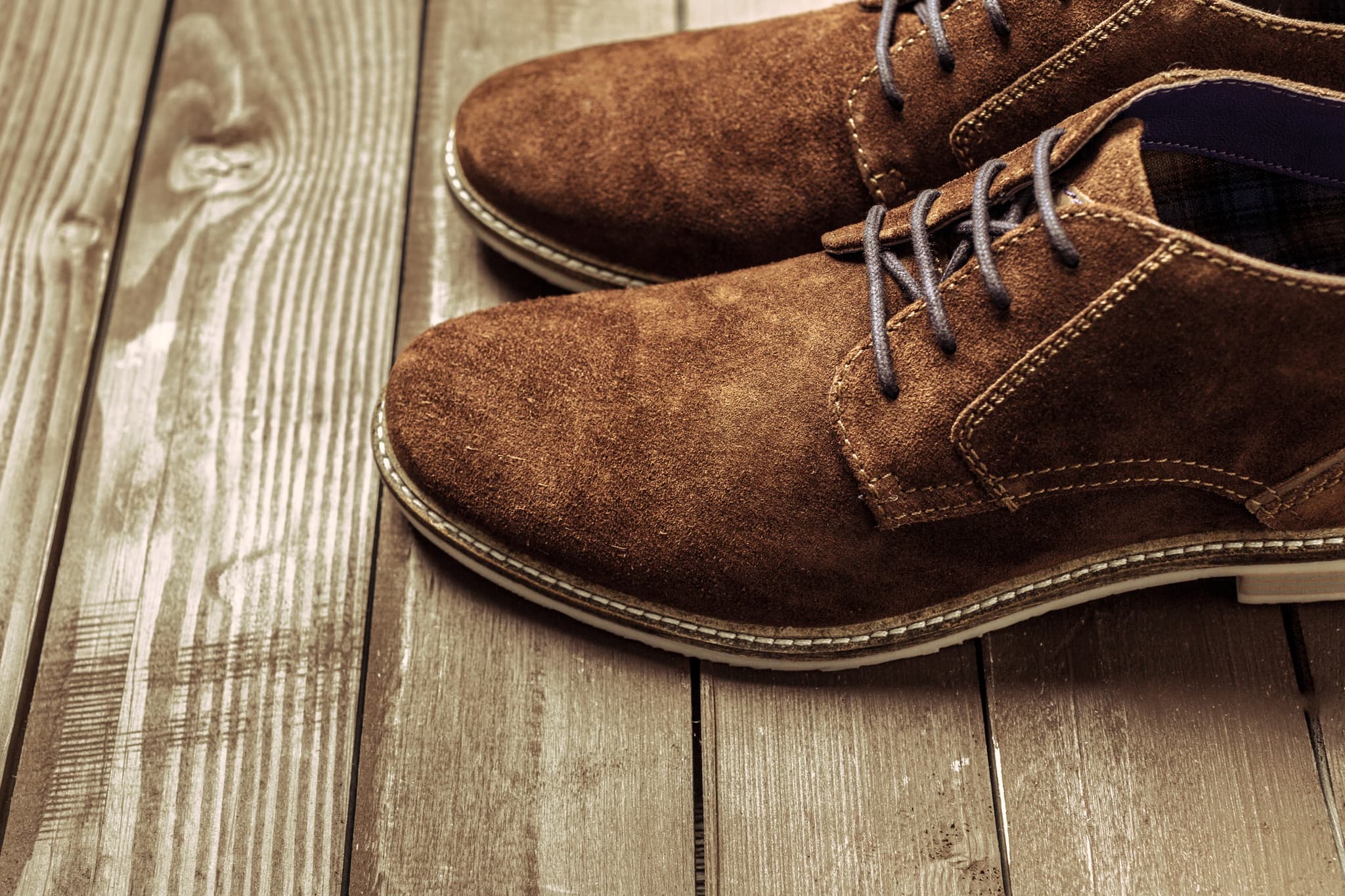
Cleaning suede shoes at home is safe for everyday dirt, dust, light scuffs and small water marks, and it comes down to the right dry tools rather than water. Let mud dry fully, then brush it away with a suede brush, lift scuffs with a suede rubber, and treat marks along the grain.
Never soak suede or use washing-up liquid. For heavy staining, dye transfer, oil, mould or expensive designer pairs, it is safer to call a specialist before you set the damage in.
What you need before you start
Suede is leather with the surface sanded to raise a soft nap. That nap is what gives the shoe its texture, and it is also what traps dirt and shows every water mark. The whole job is about grooming that nap, not washing it.
A basic home kit is short:
- A suede brush (brass or rubber bristle). This is the single most useful tool you can own.
- A suede rubber or block, sometimes sold as a suede eraser. A clean pencil eraser works in a pinch.
- A clean, dry microfibre cloth.
- A little white vinegar or specialist suede cleaner for stubborn marks.
- Optional: a suede protector spray for afterwards.
You do not need water, washing-up liquid, or any household spray cleaner. Those are the fastest way to stain a pair of suede shoes for good.
How to clean suede shoes at home, step by step
Work in good light and take your time. Suede rewards patience.
1. Let it dry, then brush
If the shoes are muddy or wet, do nothing until they are completely dry. Stuff them with paper to hold their shape and keep them away from direct heat like a radiator, which hardens leather and can crack it.
Once dry, brush the whole shoe in one direction to lift the nap and knock out loose dirt. Then brush more firmly back and forth over any dirty patches.
2. Lift scuffs and shiny patches with the rubber
Suede goes shiny and flat where it rubs, at the toe and along the sides. Rub these areas firmly with the suede rubber, the same way you would erase pencil. It takes the shine off and lifts the flattened nap. Finish by brushing again to blend it in.
3. Treat marks and light stains
For a mark that will not brush out, dampen a cloth very lightly with white vinegar (not water) and rub gently along the grain. Vinegar evaporates cleanly and does not leave the ring that water does.
Let it dry fully, then brush the nap back up. Test on a hidden spot first, for example the heel or inside edge, before touching the main of the shoe.
4. Water marks and salt stains
Winter salt and rain leave pale tide lines. The trick many people miss is that you fix a water mark with more even moisture, not less.
Lightly dampen the whole panel evenly with a barely-wet cloth so there is no hard edge, then blot, reshape, stuff with paper and let it dry slowly. Brush once dry.
Salt stains from gritted pavements should be lifted as soon as you can, as salt draws moisture and can leave a permanent white bloom if it sits.
5. Grease and oil
Be honest with yourself here. A fresh grease spot can sometimes be knocked back by working a little talcum powder or cornflour into it, leaving it overnight to draw the oil out, then brushing away. Old, set-in oil that has darkened the suede is a specialist job and rarely comes out fully at home.
Protecting suede after cleaning
Once the shoes are clean and dry, a suede protector spray helps rain and stains sit on the surface instead of soaking in.
Hold the can back from the shoe, mist lightly and evenly, let it dry, then repeat. Two thin coats beat one heavy one, which can darken the suede. Re-apply every few weeks in winter.
Common mistakes that ruin suede
A lot of suede damage is made worse at home, not by the original spill. The usual culprits:
- Soaking suede or scrubbing it under the tap. Water spreads a stain and flattens the nap.
- Using washing-up liquid, saddle soap or leather cream. These are for smooth leather, not suede, and they stain and stiffen the nap.
- Drying wet shoes on a radiator. Heat shrinks and hardens the leather.
- Rubbing at a fresh stain hard and fast, which pushes it deeper.
- Colouring in a worn patch with a marker pen. It nearly always makes professional restoration harder.
When to call a specialist
Doing the easy jobs at home is sensible. Knowing when to stop is what saves the shoe. It is worth getting professional help when:
- The stain is oil, ink, dye transfer from a bag or jeans, or an old set-in mark.
- There is mould or a musty smell, which needs proper treatment, not just a wipe.
- The colour has faded, gone patchy, or needs re-tinting.
- They are expensive or hard to replace, for example designer suede trainers or boots.
- You have already tried and the mark is spreading or the nap looks damaged.
A specialist can clean the whole shoe evenly, re-raise the nap, re-colour where needed and re-protect, rather than spot-fixing one patch. If you are not sure, it is always cheaper to ask before you experiment.
At Ace of Suedes we clean and restore suede footwear by hand at our Edmonton workshop in North London, from everyday boots to designer trainers.
You can see the full detail on our suede and leather shoe, boot and trainer cleaning service, or read about our wider suede, sheepskin and shearling care.
We offer local collection across North London, and a tracked postal cleaning service for anywhere in the UK. When you are ready, you can book a clean online.