

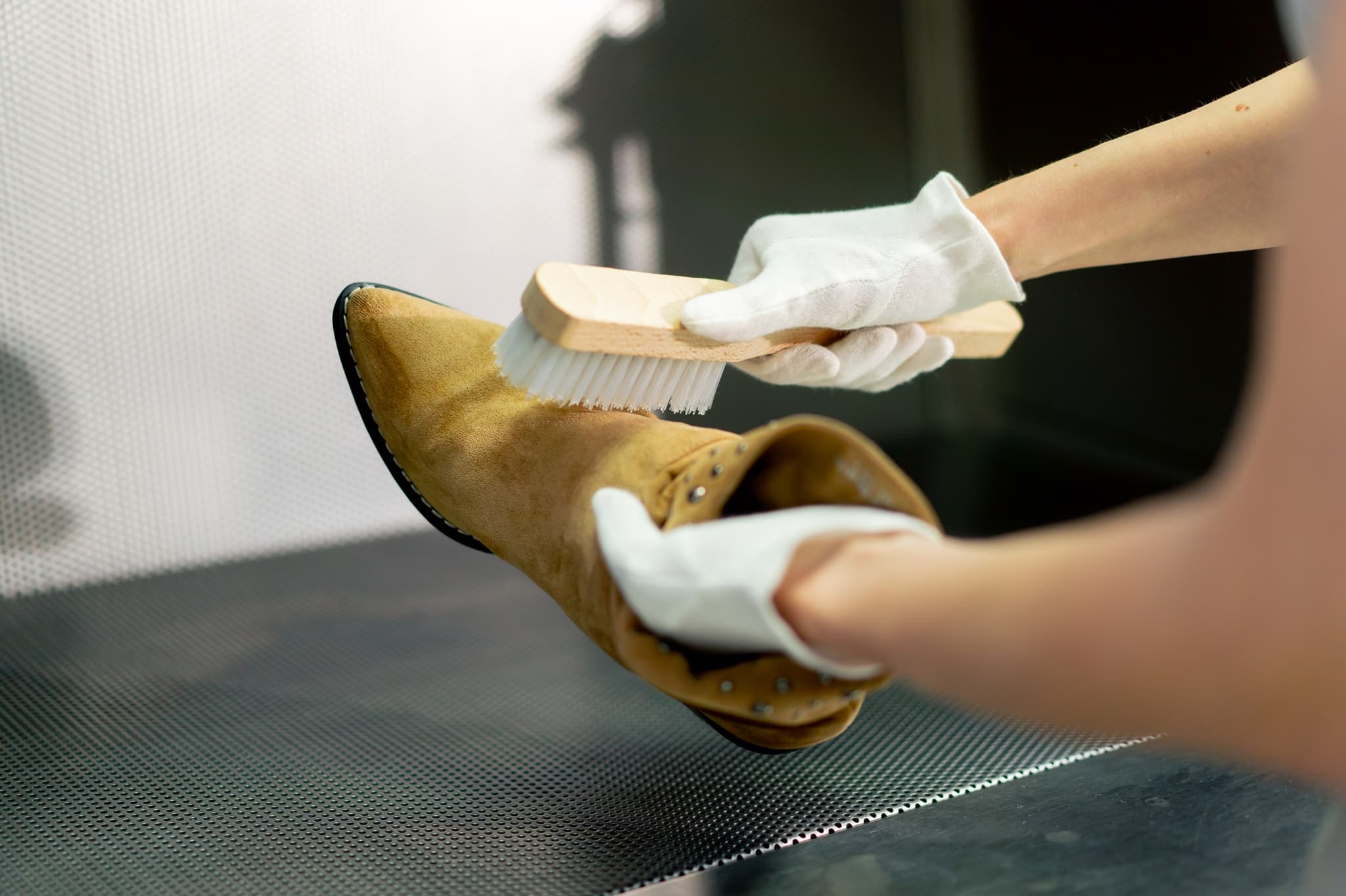
Getting stains out of suede comes down to three things: acting on the nap dry, matching the method to the stain, and knowing when to stop.
Suede is leather with the surface sanded into a soft nap, so it drinks up liquid and cannot be scrubbed or soaked the way you would treat a fabric.
Blot fresh spills at once, lift dried marks with a suede brush and a suede rubber, and always work with the type of stain in front of you rather than reaching for one all-purpose cleaner. Plenty of marks lift at home. Set-in oil, ink, dye transfer and old stains usually need a specialist.
Why suede marks so easily, and why that changes the fix
The nap that gives suede its look is thousands of tiny raised fibres. Those fibres trap dust and grip liquid on contact, which is why a single drip can leave a dark ring while the leather underneath is still fine. Two rules follow from that, and they run through everything below.
First, suede has almost no protective coating, so water and solvents move straight into it. That is the opposite of a finished, pigmented leather you can wipe.
Second, because the damage is in the nap rather than on a surface film, most suede work is dry work: brushing, lifting and abrading, not washing. Get those two ideas straight and half the mistakes people make disappear.
The specialist's method for any suede stain
After 35 years at the bench, I treat every suede mark the same way to begin with, whatever caused it. The order matters more than any single trick.
- Act on the state, not the panic. Wet spill? Blot it. Dried mark? Leave it to dry fully first, because working a damp stain drives it deeper.
- Blot, never rub. Press a clean, dry, pale cloth onto a fresh spill to draw liquid up and out. Rubbing spreads it and mats the nap.
- Test first. Whatever you plan to use, try it on a hidden patch, an inside seam or the tongue, and wait for it to dry before you touch the visible area. Suede can change tone when treated, and you want to know that in a place no one sees.
- Work dry and work light. Bring the nap back with a suede brush, brushing one way then gently back, and lift surface marks with a suede rubber or a clean pencil eraser. Little and often beats one hard go.
- Know when to stop. If a mark is not shifting after a measured attempt, stop. Repeated scrubbing and repeated wetting are what turn a treatable stain into a permanent one.
Everything below is a variation on that method, tuned to the stain.
Getting stains out of suede by type
Water marks and rain spots
Counterintuitively, the fix for a water ring is more water, applied evenly. Lightly and evenly dampen the whole panel with a barely wet cloth or a fine mist so there is no dry edge to form a tide line, then blot, reshape the nap with a brush, and let it dry naturally away from heat. Stuff shoes or bags with paper to hold their shape while they dry.
Mud and dirt
Do nothing while it is wet. Let mud dry completely, then knock off the bulk and brush the rest out of the nap with a suede brush. Trying to wipe wet mud only presses it into the fibres and widens the mark.
Grease and oil
Oil is the one to move on quickly. Blot any excess, then draw the oil out with an absorbent powder such as talc or cornflour: cover the mark, leave it several hours or overnight, then brush away and repeat if needed. Powder pulls oil up out of the nap. What it will not do is fully clear an old, set grease stain, which has usually darkened the leather itself.
Ink
Be honest with yourself here. A tiny fresh ballpoint dot can sometimes be feathered away with careful brushing, but ink spreads fast in suede and household solvents often bleed the mark wider or strip the colour. On anything valuable, a bag or a jacket, leave ink alone and let a specialist assess it.
Wine, coffee and food
Blot up every bit of liquid immediately with a dry cloth, working from the outside of the spill inwards so you do not grow the ring. Let it dry, then brush. Resist the urge to dab water or soap at it, which drives the colour deeper. Anything sugary or coloured that has dried in is a stronger candidate for professional treatment.
Blood
Only ever cold, never warm, because warmth sets the protein and fixes the stain. Blot a fresh spot with a cloth barely dampened in cold water, lifting rather than rubbing, and let it dry before brushing. Dried blood is difficult and often a specialist job.
Salt and winter marks
The white tide lines from road and pavement salt are common on winter boots. A very lightly dampened cloth, or a weak mix of white vinegar and water on a cloth (wrung almost dry), can lift them; blot, let it dry fully, then brush the nap back up. Treat salt sooner rather than later, as it dries out and damages the leather over time.
Chewing gum and candle wax
Harden it before you touch it. Chill the item, or hold an ice cube in a bag against the gum or wax until it goes brittle, then carefully lift the solid piece away and brush the residue. Never pull at soft gum, which tears fibres out of the nap.
Dye transfer and colour rub-off
Dark denim onto pale suede, or a bag strap onto a jacket, transfers colour into the nap and is one of the hardest marks to shift. Gentle brushing may reduce fresh, light transfer.
Anything set in has usually stained the fibres through and needs professional re-cleaning or recolouring rather than a home fix.
Stains that usually will not come out at home
Some marks are beyond a brush and a cloth, and pretending otherwise only risks the item. Treat these as specialist work from the start:
- Old, set-in stains that have been there weeks or months.
- Oil or grease that has darkened the leather itself, not just the nap.
- Ink, dye transfer and colour bleed.
- Mould and mildew from damp storage, which needs proper treatment so it does not return.
- Large water damage across a whole garment, or anything with a musty smell.
None of those means the item is ruined. It means the safe next step is an assessment, not another home attempt.
Mistakes that set a stain for good
Most suede that reaches my bench "unsaveable" was made worse at home, not by the original spill. The usual culprits:
- Soaking suede or holding it under a tap.
- Washing-up liquid, household cleaners or baby wipes, which strip colour and leave their own marks.
- Rubbing hard at a fresh spill and spreading it.
- Drying wet suede on a radiator or with a hairdryer, which stiffens and cracks the leather.
- Working a stain while it is still damp, which pushes it deeper.
If in doubt, do less. A mark left alone is far easier for a specialist to treat than one that has been scrubbed, wetted and heat-dried.
When to bring suede to a specialist
Call it early when the item matters or the stain is stubborn: valuable or designer pieces, oil and ink, dye transfer, mould, or anything you have already tried on without success.
As a leather and suede specialist in Edmonton, North London, we clean and restore suede across every kind of item, from a suede or sheepskin jacket to suede shoes and boots and suede handbags. We assess the piece and the stain first, then quote before any work starts, so you know where you stand.
If your problem is everyday cleaning rather than a specific stain, our guide on how to clean suede shoes at home walks through the routine care side. And if you are not local, you can send items in on our tracked postal service from anywhere in the UK. When you are ready, choose the right item from our services and book it in online.