

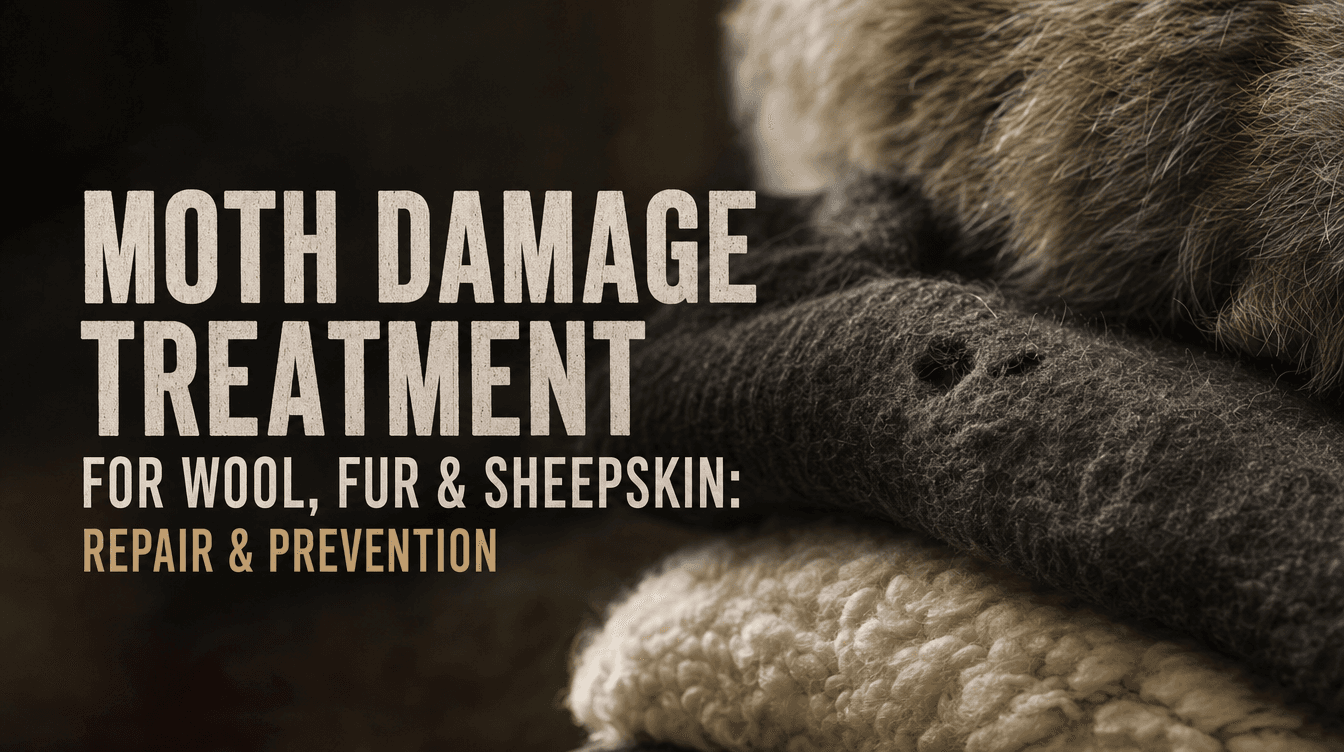
Moth damage treatment has two separate jobs: killing every stage of the insect, including the eggs and larvae you cannot easily see, and then dealing with the damage already done. The adult moths flying about do no eating at all.
The harm comes from their larvae, which feed on keratin, the protein in wool, fur, silk and the fleece of sheepskin. Treat the item and the place it was stored at the same time, clean anything that goes back in the wardrobe, and accept that holes and bald patches do not grow back, although some can be repaired.
Which moths cause the damage
Two small species are behind almost all damage to clothes in British homes:
- The common clothes moth. Pale, golden-buff and less than a centimetre long. It prefers to run or hide in folds rather than fly, and it avoids light.
- The case-bearing clothes moth. Similar in size but duller and greyer. Its larvae carry a small silk case made from the fibres they have eaten, often in the same colour as the garment.
A moth that flies happily around a lamp in the evening is almost certainly a harmless outdoor species that has wandered in. The ones to worry about are the ones you disturb when you move a coat or open a drawer.
Carpet beetle larvae, small and bristly and sometimes called woolly bears, cause very similar holes and are often mistaken for moth damage. The treatment and prevention are much the same.
What moth larvae eat, and why
Larvae need keratin to grow, which is why they go for animal fibres and leave cotton, linen and synthetics largely alone, unless those are blended with wool or heavily soiled.
What makes an item attractive to them is not just what it is made of, but what is on it. Sweat, skin cells, food marks and spilled drinks add nutrients the larvae need, which is why damage so often starts at a collar, a cuff, an underarm or a stain. Worn-and-put-away clothes are at far greater risk than clean ones.
They also want darkness and stillness. The back of a wardrobe, a box under the bed, a bag in the loft or a drawer that is rarely opened suits them perfectly.
How to recognise moth damage
Look for more than holes. The earlier signs are easier to miss:
- Irregular holes, often clustered, and usually on the parts of the garment hidden from light, such as under a collar or along a fold.
- Thinning or grazed patches on knitwear where the surface fibres have been eaten but no hole has formed yet.
- Fine silk webbing or tubes on the surface, especially along seams.
- Small cases the colour of the fabric, clinging to it or lying underneath.
- Frass, a fine gritty dust like sand, which is the larvae's droppings.
- Loose tufts of hair or bald patches on fur, because the larvae cut through the hairs close to the skin.
- Bald or thin areas on the fleece of a sheepskin, usually on the inside of the coat where it is dark.
Moth damage in wool, fur and sheepskin
Each of these materials suffers differently, and that affects what can be done.
Wool, cashmere and knitwear
Fine knitwear is the most vulnerable, because the fibres are soft and the knit gives larvae easy access. Cashmere, merino, alpaca and angora are all targets. A single small hole in a knit can grow as the yarn around it loosens, so a damaged jumper should not be worn or washed hard until it has been dealt with.
Fur
On fur, larvae cut through hairs near the base. The first sign is often fur coming away in your hand or a patch that looks thin when the coat is brushed. The skin underneath is usually intact at first, but hair lost this way does not regrow. Older furs stored for years without being worn are especially at risk. Our fur cleaning service covers the cleaning side.
Sheepskin and shearling
Moths eat the woolly fleece, not the leather or suede outside. Damage usually shows as bald patches on the inside, particularly around the collar, cuffs and hem, where sweat and skin oils collect. Because the outside can look perfect, the damage is often found late. Our sheepskin and shearling care guide covers storing these coats safely through the summer.
Leather
Plain leather is rarely eaten. Where leather garments do suffer, it is usually through a wool lining, a fur collar, a knitted cuff or a dirty surface. Trims on leather and on knitwear are covered by garments with leather, suede or fur trim.
Moth damage treatment: what needs to happen
Getting rid of moths means dealing with every stage of the life cycle: eggs, larvae, pupae and adults. Eggs are tiny and pale, larvae hide in seams and folds, and any stage missed can start the cycle again.
For garments that can be treated at home, such as a wool jumper, the usual approach is to seal the item in a plastic bag and freeze it for around two weeks, then let it return to room temperature inside the bag so no condensation forms on it. A hot wash at the temperature on the care label does the same job for anything that can take it.
For fur, sheepskin, leather with wool linings and fine or valuable pieces, that is not an option. Freezing and washing can damage the skin, the fleece and the finish. Our moth infestation treatment and prevention service is set up to kill moths, eggs and larvae in these items, using ozone treatment alongside gentle dry cleaning methods chosen to suit delicate materials.
Treating the wardrobe as well as the coat
Treating one damaged item and hanging it back in the same wardrobe rarely ends the problem. While the item is away:
- Empty the wardrobe or drawer completely and check every item made of wool, fur, silk or feathers.
- Vacuum thoroughly, including corners, the tops of shelves, the edges of the carpet and along skirting boards, then empty the vacuum outside.
- Wipe surfaces down and leave the doors open for a while to let light and air in.
- Clean or treat anything else affected before it goes back in.
- Keep checking for the next few months, because eggs laid before you started can still hatch.
Pheromone traps are useful for showing whether adult males are still about, but they do not end an infestation on their own.
Can moth holes be repaired?
Treatment stops further damage. It does not undo what has already happened. Holes do not close, and fur and fleece do not regrow. Whether a piece can be repaired depends on the material, the size and position of the damage and how much of the item is affected.
- Small holes in fur or sheepskin can sometimes be repaired, particularly away from obvious areas.
- Damaged linings in coats and jackets can be replaced.
- Widespread damage across a garment is often beyond a repair that makes sense.
Our repair and alterations service assesses each piece individually, so you will know what is possible before any work is done.
How to prevent moth damage
Prevention is mostly about habits rather than products:
- Clean before storing. This is the single most useful step. Larvae are drawn to soiled fibres, so anything put away for the season should go away clean.
- Store in sealed or moth-proof covers. Zipped cotton or moth-proof garment bags keep adults from laying eggs on the item. Seal knitwear in bags or lidded boxes.
- Disturb your wardrobe. Moths thrive where nothing moves. Opening doors, moving clothes along the rail and airing things now and then all help.
- Check stored items a few times a year, especially in spring and summer, when adults are most active.
- Treat cedar and lavender as deterrents only. They may discourage adults a little, and cedar loses its scent over time. Neither kills eggs or larvae.
- Keep an eye on the whole house. Wool rugs, upholstery and stored blankets can all host moths that then move into a wardrobe.
If you have found moth damage on a piece you want to keep, it is worth dealing with sooner rather than later. We collect across London, and from anywhere else in the UK, items can be sent in by our tracked postal service.